April is a month set aside to help raise awareness for organ donation. Through organ donation, a tragedy for one family is able to provide the miracle needed for another family.
One Clarke County resident who was blessed with a few more years of life thanks to a heart transplant was David Dearman. David was always active, and his family remembers how he never had any health issues for years. Those precious memories are part of the reason his family has been so grateful for the organ donor that made it possible for them to have just a few more years with David.
“He was always going,” expressed Morgan Dearman Smith, David’s daughter. “He was always into something from hunting, fishing, hanging out with friends, working offshore, spending times with his kids, and he would always be there for games and to help.”
Although he had some heart trouble before, David never anticipated that he would have to have a heart transplant later on.
“I think 2011 is when he first started having some issues with his heart. I think that’s when he first got sick and had to quit working offshore because he got his defibrillator not long after that. He was still in good shape at that time; he just couldn’t work offshore because the floor was a magnetic floor, and it would set the defibrillator off,” stated Angelia Dearman, David’s wife. “I noticed him starting to get worse in the summer of 2015: a lot more swelling and a lot more shortness of breath. When we were in Destin for our wedding, he was really swollen, short of breath, and just didn’t feel well. I told him he needed to see a doctor when we got home, and they gave us the run around for a couple of weeks saying that it was different things and would give him more medicine, but we didn’t need more medicine, but we didn’t need more medicine; we needed answers.”
To get the answers they needed, David and Angelia traveled to UAB for a second opinion. They didn’t get the answer they expected, and their journey with a transplant and organ donation began.
“He had done really well for four years and then took a turn for the worse in 2015. In early 2015, he had an echo, and I think his heart ejection fraction was around 35. Then, about four months later when they did it over at UAB, it had already dropped to 15. It was all due to an enlarged heart, and we’re not really sure why it was enlarged. It may have been from a viral infection that he had at some point in time. No one really knows,” explained Angelia. “They told us that when a heart is that damaged that the next step is a heart transplant. We weren’t really prepared for that.”
There is a great deal of tests that are involved before a transplant can happen. They took blood so that they could get a match for David, and then he had to undergo multiple other tests and procedures to make sure that he was fully prepared for a transplant before they would put him on the list.
“We didn’t realize how much went into it. They told him that they didn’t think he’d be able to go home until he got his transplant because he was so sick. He had to undergo all these tests,” recalled Angelia. “He had to do a psychological exam, which was awful. He did not do well on that at all. In fact, he got so mad one time that he took all the paperwork from the psychologist and told him that he would do the exam on him. The psychology exam lasted probably two or three hours. He had to see a dentist and have his wisdom teeth removed. Before he could have the transplant, every body system had to be examined. If they thought anything was wrong or could cause infection, it had to be fixed before they would give him a new heart. He went through so much just to be put on the transplant list.”
After spending three weeks at UAB, David was allowed to return home. They were told that when they were called about a possible heart, they would have to be at UAB within three hours so that tests could be done to make sure that he was a match and they could get him prepared for surgery. They were only home for a short time before that call came, and David was in his favorite place when they got the call: the deer stand. It was his birthday, and he was just doing what he enjoyed before everything changed for him.
“Three weeks after he came home, he was out deer hunting. I was at work in Meridian when I got a call asking where he was because they had a heart for him. I knew the clock had already started ticking, so I called him and he said that he had just gotten the voicemail,” remembered Angelia. “I called my daddy, and he drove to my home. He and David packed my bag and met me in Meridian. I think we made it to UAB in two hours.”
His family was glad to hear that he had a heart, but they were also sad for the family that made it possible for him to have a new heart.
“We had been praying for a new heart. It was bittersweet because I realized some mother had just lost her child, but my child was going to be given a new chance at life,” said Jo Dearman, David’s mother. “Again, we had a lot of prayer for not only David and the doctors, but also for the precious donor’s family.”
One of the things the family learned when they arrived at UAB is that two people are always called when there is a transplant. Both of them are tested for a match, but the one higher up on the list gets the organ if it is a match.
“It felt like it took forever getting to UAB!” exclaimed Candy Dearman McDaniel, David’s sister. “Once there, there was another family in the waiting room. It was a young engaged couple. The guy was also waiting for a heart. He was about Kyle’s (David’s son) age. When David learned this, he was ready to go. He wanted him to have it. He said he had lived a good life and wanted him to have a chance at the same. I’ll never forget Angelia telling David that their wonderful life had just begun, and he just smiled at her!”
He was declared a match, and the family was able to speak with him one last time before sending him off to surgery.
“One thing I’ll never forget is when he asked me if I thought he’d love the same with his new heart because he loved so much, and I told him that I bet he’d be able to love so much more. He did!” recalled Candy. “As they rolled him to surgery, it was the scariest moment of my life! Trying to be brave, we sang ‘Happy Birthday’ to him as he was rolled away.”
The surgery was successful, and everyone couldn’t wait to be able to see him and check on him once they were allowed.
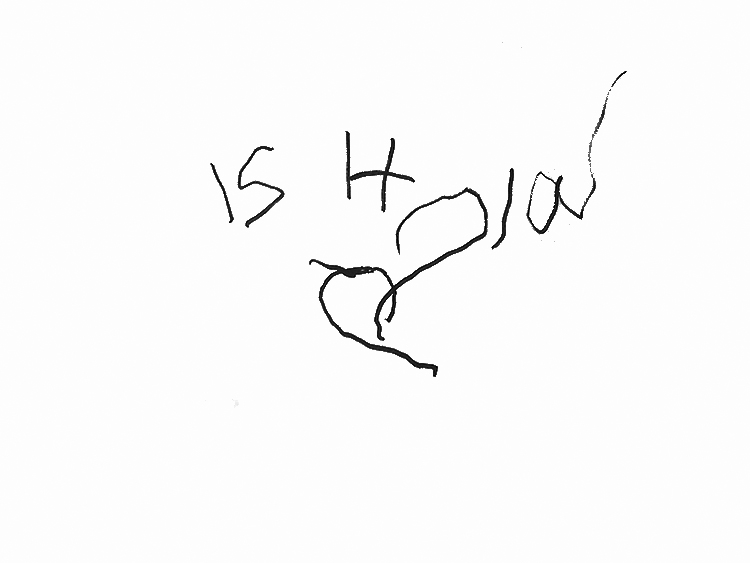
“I went in to check on him after everyone was resting,” remembered Candy. “He couldn’t really talk, so I gave him a pen and paper, and we played charades. He wanted to know if his new heart was in. I told him yes and that it was perfect!”
He began to recover quickly with his new heart, and he didn’t complain too much about what he was going through.
“After the surgery, he was able to get the tube out within 12 hours. He stayed in intensive care for about three days, and they had to get him up to walk and everything. It was difficult for him to get up because he had been cut from his neck down to his belly button and had five or six drainage tubes in him,” expressed Angelia. “When he was up walking one day, we saw this young girl who was probably 13, and she was out walking. She’d had a lung transplant, heart transplant, and something else and was walking like it was no problem. David said he guessed he should just suck it up since he only had one transplant. They were really good to David at UAB. He had to learn how to walk, eat, and do everything again.”
David was just starting his life with a new heart, and although there had to be a few changes, he still tried to do some of the things he loved.
“He couldn’t just go and do like he used to do. His life forever changed, but we still had him here with us with a second chance at life,” stated Morgan. “He had to take over 100 pills of medicine a day just to keep him alive, from rejection medications to multiple others. He still tried to go and do things like hunting and fishing and spending time with friends and family even though he would be so swollen from head to toe. I know he had to have been hurting, but he never let us know.”
For weeks and months after the transplant, David would have to undergo a biopsy to test his heart for rejection. Unfortunately, the first few tests indicated rejection, so the hospital first tried giving him steroids to help suppress his immune system so that it would not reject it. After the steroids didn’t work, they had to try something else. Even through the side effects of his new treatment, David still did what he loved to do . . .even if it did cause him to end up having to go to the doctor for another problem caused by doing so.
“Finally, he rejected enough times that they decided that they needed to do what was called photopheresis, so he had to have a port placed. He had to go two days every time, and they would drain his blood out and run it through this machine. It would go through this UV light, and the UV light would supposedly heal all the antibodies that were filling up and causing the rejection, and then they’d put the blood back in him,” explained Angelia. “We had to stay in Birmingham for five months before we got to come home for good. When David came home, he felt so much better. They tried to tell him that with the photopheresis, he’d be real sensitive to the sun and would need to be real careful. He loved to fish, so the first thing he did was go fishing. We came back for the doctor visit, and he had second degree burns on his arms from fishing. He applied sunscreen, but he didn’t keep reapplying sunscreen. We had to deal with the skin doctor for a while with the second degree burns on his arms.”
Although he was enjoying life with a new heart and doing his best to continue with some of his passions—sometimes against the family and doctors’ wishes—David understood the sacrifice that had to be made for him to have his new life. The knowledge of what it really takes became even more real when he attended the UAB event that allows donor families and transplant patients to be able to gather together. He was never able to meet his donor family, but he and Angelia still reached out to them through letters.
“Our first year, we went to the celebration of life picnic that UAB has, and it was really neat to be with donor families and other transplant people. I think that was when it made everything real for him and made him realize that somebody actually died for him,” expressed Angelia. “I sent our donor family an email and some letters and cards. We were told that the mom didn’t want to have any contact with us, but the dad did. We didn’t know it was a 28 year old donor, and I feel like it was something very tragic like a car accident, so the mom just didn’t want to meet us.”
Over the next few years, David’s heart never really gave him any trouble. Instead, his lungs and highly compromised immune system are what caused him to have problems. By the time the pandemic started in 2020, he had to be very careful about coming into contact with too many people. For almost a year, he was successfully able to avoid Covid. Unfortunately, he eventually contracted the virus. After a hard-fought stay in the hospital, David passed away March 15, 2021.
His experience and many years with his new heart made an impact on those around him. In fact, although everything was scary for his family at the time, it caused some of them to really think about what organ donation is.
“I was scared at the time. I didn’t really know what was about to happen or how his life would be forever changed,” declared Morgan. “I had never really thought about organ donation until then. I had known about it but never really understood it. I am now an organ donor because of my daddy.”
An organ donor made it possible for David to have more time with his family and friends. Although tragedies have to occur, it is important for others to continue to choose to be organ donors so that they can provide the same hope and miracle for other families.