Column by Felder Rushing
As much as I’d love to have an All-American gardener, I just can’t bring myself to get rid of my beloved daffodils, which are not native.
Don’t get me wrong; I deeply appreciate, both intellectually and emotionally, the beauty, durability, wildlife support, and crucial role of how native plants tie everything together. But I’m a world gardener who savors foods from here (corn, pecans, strawberries, squash, blueberries), Europe (lettuce, wheat), Africa (okra, blackeyed peas, melons), South America (beans, potatoes, tomatoes), Australia (not much, other than macadamia nuts), and Asia (peaches, apples, rice).
Oh, we make exceptions for those? And for the millions of acres of lawn grasses, groundcovers, azaleas, and other highly favored native-displacing plants from afar?
To be forthright, I grow lots of plants, both from here and abroad, considered to be weedy. Not all, because some escape the garden to become seriously destructive to entire ecosystems; kudzu, Chinese tallow tree, privit, and water hyacinth come to mind. And I’m coming around to how imported ornamental pears and wisteria are disrupting big swaths of both native woodland and commercial forests.
But it’s not just those that seed or run around. Countless other over-planted species from overseas (turfgrasses, most shrubs) may not be able to go very far on their own, but are spread far and wide by horticulturists, landscapers, and home gardeners, without providing much to wildlife in return.
And on top of this, four of my five worst garden weeds are native plants. Many natives are among my favorite garden plants but require regular control (goldenrod, I’m looking at you). At the risk of further irking ecologists who argue that only non-native plants can be “invasive” I’m confounded at the time and energy I waste pulling Virginia creeper, trumpet vine, and oak tree seedlings, and spraying poison ivy. All natives with wildlife benefits, but all unwanted plants that keep invading and taking over my garden from outside my fence.
Plus, in these debates, it gets lost how when the Earth’s single land mass split into smaller continents, similar plants floated on them to different corners of the modern world. That’s why both Mississippi and parts of China have magnolias, dogwoods, pines, hydrangea, ferns, beautyberries, maples, azaleas, sweetshrub, iris, honeysuckle, hollies, and Virginia creeper.
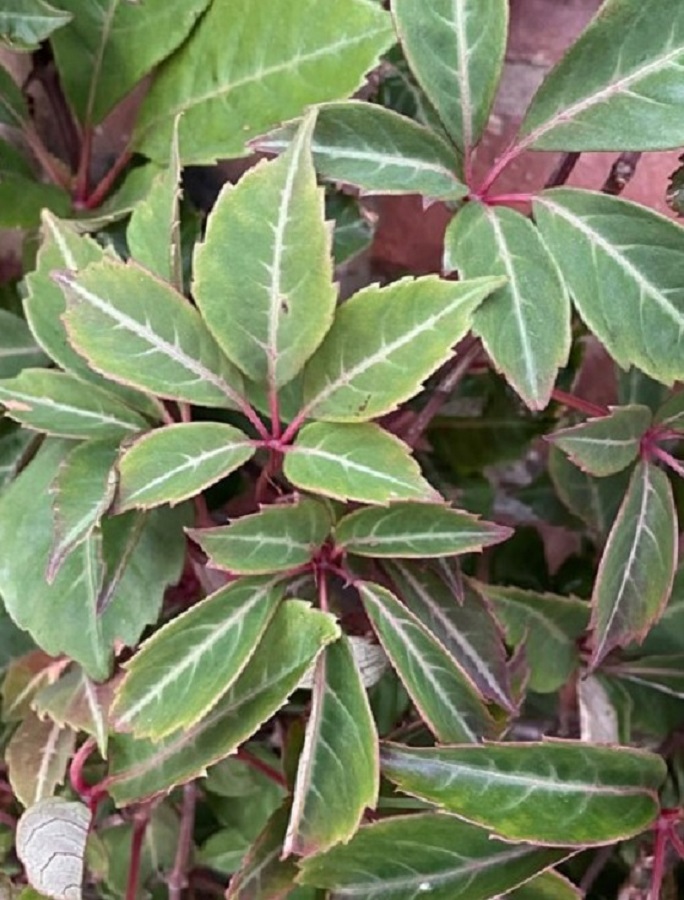
In fact, I am planting a new-to-me “Chinese Virginia creeper” (Parthenocissus henryana), with its dark velvety green, bronze-tinged leaves with silvery veins. It’s prettier, and less weedy than the native.
Anyway, I wholeheartedly agree that it is entirely possible to have a beautiful, wildlife-friendly, ecology-sustaining all-native garden. And in general, I will always favor, plant, promote, and celebrate the benefits of suitable natives as smart-choice landscape plants. In fact, email me for a free printable brochure listing and showing how some great ones can be used in good-looking Mississippi gardens.
But I’m done being hypocritical on the topic. I grow plants regardless of country of origin and try to keep an eye on those most likely to become real problems. Until I am convinced otherwise, I am not going to stop growing nandina, mimosa, Spanish bluebells, Mexican petunia, vinca, and liriope. And even St. Augustine and azaleas, were I ever to consider them for my yard.
And because of this, though I was twice past president of the Mississippi Native Plant Society, I have become a pariah among some of my dear friends and peers who detest my stance. So, out of respect for one of the society’s main tenets - of not promoting invasive plants - I have resigned from the group.
When Chinese Virginia creeper is outlawed, only us outlaws will grow it.